
In a groundbreaking scientific leap, researchers have achieved a remarkable feat in the quest to unlock the secrets of human longevity. By successfully transferring a longevity gene from naked mole rats to mice, scientists have paved the way for enhanced health and extended lifespans. This development holds profound implications for our understanding of aging and offers a glimmer of hope for potentially extending human lifespan and improving overall well-being.
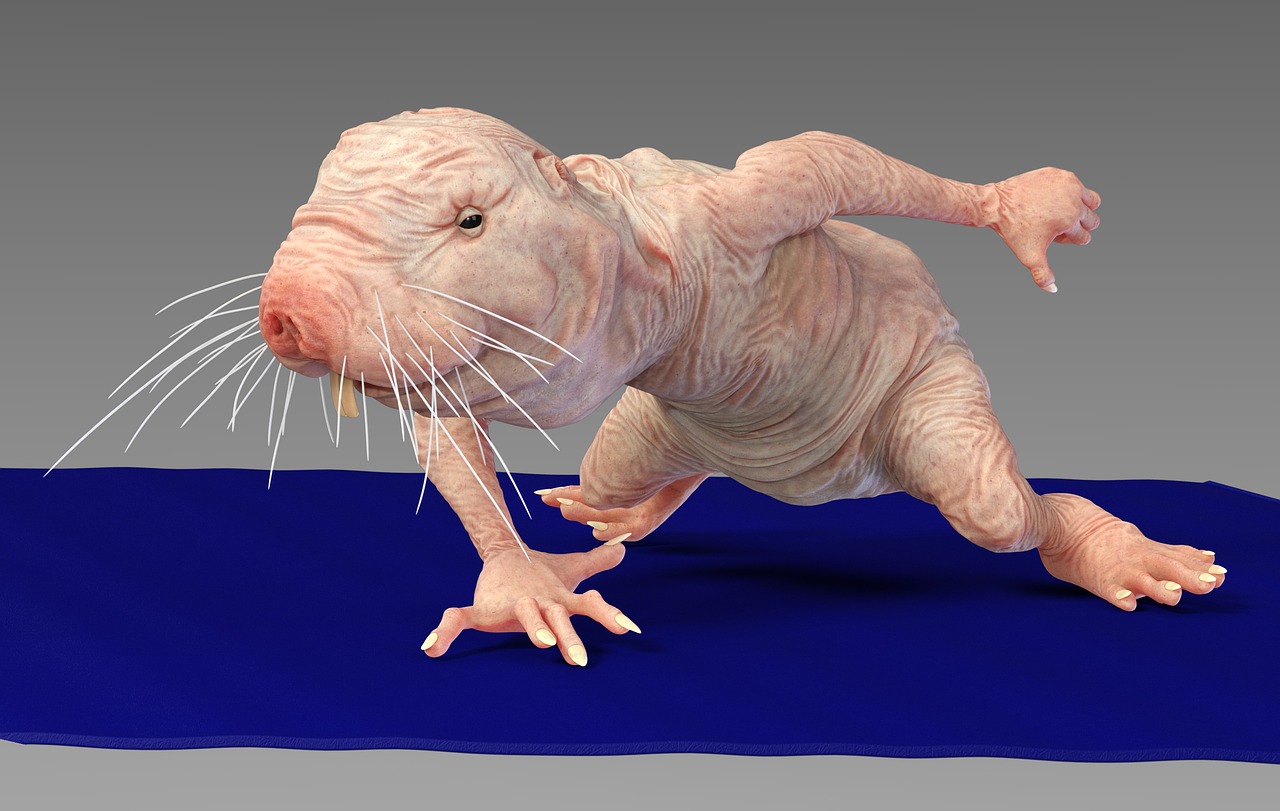
Naked mole rats, small rodents with a rather peculiar appearance, have long captivated the attention of the scientific community due to their extraordinary longevity and resilience against age-related diseases. These rodents can live up to an astonishing 41 years—nearly ten times longer than similar-sized rodents. More intriguingly, they seem to defy the common ailments of aging, including neurodegenerative disorders, cardiovascular diseases, arthritis, and even cancer.
At the heart of the naked mole rats’ exceptional longevity lies high molecular weight hyaluronic acid (HMW-HA), a substance that plays a pivotal role in their resistance to cancer. Unlike mice and humans, naked mole rats possess approximately ten times more HMW-HA in their bodies, making them significantly less susceptible to tumor formation. The researchers sought to unravel whether this unique trait could be harnessed to improve health and extend lifespan in other animals, including humans.
The team embarked on an ambitious experiment, genetically modifying mice to produce the naked mole rat version of the hyaluronan synthase 2 gene, responsible for producing the protein that generates HMW-HA. While all mammals share this gene, the naked mole rat version seemed to be more potent, leading to stronger gene expression. The results were striking: mice with the naked mole rat gene displayed increased protection against both spontaneous and chemically induced tumors, showcasing the gene’s role in cancer resistance.
Notably, mice with the transferred gene exhibited improved overall health and an extension of their lifespan, with a median increase of approximately 4.4 percent. As these genetically altered mice aged, they displayed reduced inflammation in various parts of their bodies—a hallmark of the aging process—along with healthier gut profiles. While the exact mechanisms underpinning these effects are not yet fully understood, the researchers believe that HMW-HA’s direct influence on the immune system plays a critical role.
The implications of this breakthrough are profound. The successful transfer of the naked mole rat gene to mice indicates the potential for developing interventions that could enhance human longevity and reduce the burden of age-related diseases. Gorbunova emphasizes that the study provides proof of concept that longevity mechanisms unique to specific species can be harnessed to extend the lifespans of other mammals.
While the path to translating these findings into practical applications for humans is still complex and uncertain, the researchers are cautiously optimistic. They propose two potential routes: one involves slowing down the degradation of HMW-HA, and the other involves enhancing its synthesis. Excitingly, they have already identified molecules that can slow down the degradation of hyaluronan and are currently testing them in pre-clinical trials. Seluanov expresses hope that this discovery could be just the first of many instances where adaptations from long-lived species can be used to enhance human longevity and well-being.
The successful transfer of the naked mole rat gene to mice marks a huge step in our understanding of aging and the potential for extending human lifespan. This remarkable achievement, built on the foundation of decades of research, underscores the intricate mechanisms that govern the aging process and offers a glimpse of the possibilities that lie ahead. As researchers delve deeper into the complex interplay of genes, environment, and lifestyle factors, society stands at the threshold of a new era—one where the elusive fountain of youth may be a scientific reality.
Would you undergo a procedure that transferred naked mole rat genes into your body if it promised an increased lifespan? If further testing proves it to be safe and effective, maybe it is worth a shot.
Leave a Reply