
A Multifaceted Analysis of America’s Longest-Lived Population
Hawaii’s distinction as the U.S. state with the highest life expectancy—80.7 years as of 2023—reflects a complex interplay of cultural, environmental, and systemic factors26. While this figure surpasses the national average by nearly five years, significant disparities persist among ethnic groups, with Native Hawaiians experiencing 14 fewer healthy years than their Asian counterparts5. This report examines the drivers of Hawaii’s longevity advantage while critically analyzing the challenges that threaten equitable health outcomes across its diverse population.
Ethnic Diversity and Cultural Foundations of Longevity
Hawaii’s demographic landscape, shaped by generations of immigration and indigenous traditions, provides critical insights into its health outcomes. The state’s Japanese and Chinese communities consistently demonstrate the longest life expectancies, reaching 84.3 and 83.9 years respectively for women in 20101. These populations maintain dietary practices rooted in ancestral traditions, emphasizing plant-based meals, fermented foods like natto (soybeans), and fish rich in omega-3 fatty acids27. The Honolulu Heart Program’s longitudinal studies reveal that acculturation to Western diets correlates with reduced lifespan, highlighting the protective effects of traditional eating patterns against cardiovascular disease2.
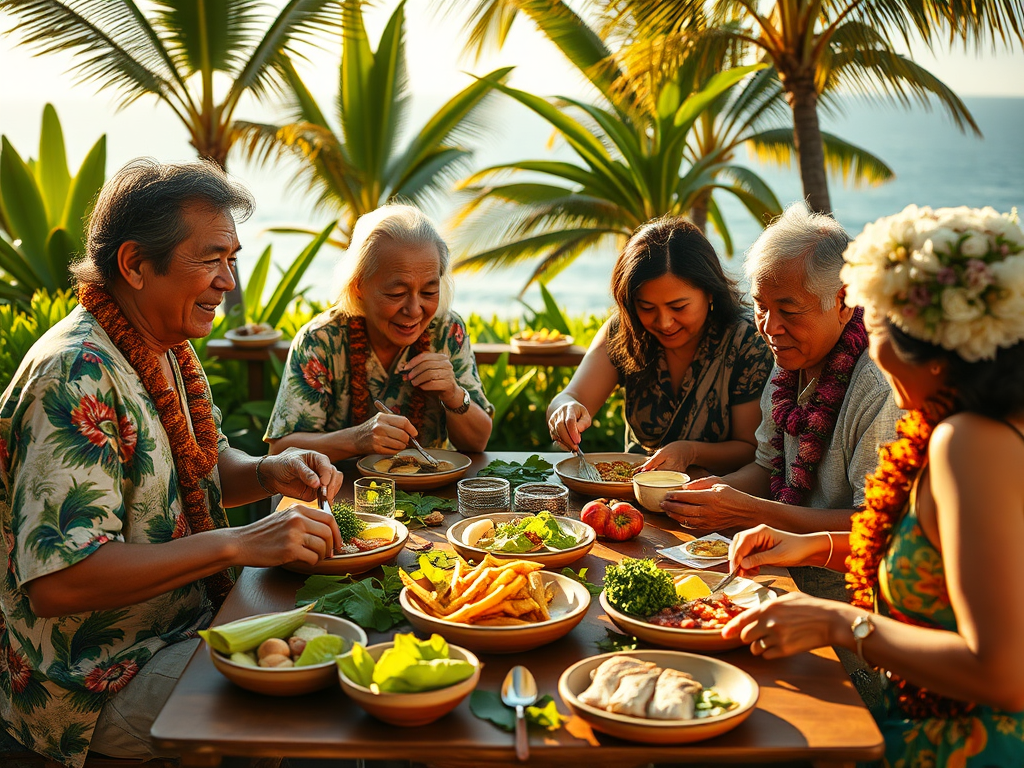
The Okinawan concept of hara hachi bu—eating until 80% full—permeates Hawaii’s health-conscious communities, naturally regulating caloric intake without restrictive dieting7. This practice, combined with the cultural value placed on multigenerational family meals, creates sustainable eating habits that contrast sharply with the fast-food culture prevalent in other states.
Healthcare Infrastructure: A Model of Preventive Medicine
Hawaii’s healthcare system, ranked first nationally for quality and accessibility, achieves remarkably low rates of preventable hospitalizations (45.2 per 1,000 Medicare enrollees vs. the U.S. average of 68.2)6. The state’s Prepaid Health Care Act of 1974 mandates employer-sponsored insurance for workers clocking 20+ weekly hours, resulting in just 4.2% uninsured residents compared to 8.6% nationally6. This coverage enables early intervention for chronic conditions—critical given that 60% of Hawaiian adults have at least one chronic disease5.
Community health centers serving rural and Native Hawaiian populations employ kahuna lāʻau lapaʻau (traditional healers) alongside Western medical staff, blending evidence-based treatments with cultural practices. This integrative approach improves treatment adherence rates, particularly for diabetes management where Native Hawaiians face 2.3 times higher mortality than state averages5.
Environmental Advantages and Active Lifestyles
The archipelago’s tropical climate facilitates year-round outdoor activity, with 83% of residents engaging in regular physical exercise compared to 76% nationally6. Coastal kaloko (fishpond) restoration projects not only preserve Native Hawaiian heritage but also promote aquatic exercise accessible to elders. Hawaii’s air quality, ranked among the cleanest in the U.S., reduces respiratory mortality by an estimated 15% compared to mainland industrial regions6.
Urban planning prioritizes walkability, with Honolulu’s Pedestrian Master Plan increasing safe walking routes by 38% since 2015. These infrastructure investments correlate with Hawaii’s obesity rate of 24.6%—significantly below the national 33.6%—and contribute to cardiovascular disease rates 22% lower than U.S. averages6.
Nutritional Paradigms: The Hawaii Diet Study
The landmark 21-day Hawaii Diet trial demonstrated dramatic health improvements, including 10.8 lb weight loss and 23.5% LDL cholesterol reduction among participants adhering to traditional eating patterns4. This ad libitum diet, comprising 77% complex carbohydrates from taro, sweet potato, and whole grains, challenges calorie-restriction models by proving satiety-compatible nutrition. Modern adaptations like the Ai Pono initiative teach Native Hawaiians to revitalize pre-colonial diets, replacing processed foods with ulu (breadfruit) and opae (shrimp) harvested through sustainable aquaculture.
Persistent Disparities: The Native Hawaiian Health Crisis
Despite statewide advantages, Native Hawaiians experience life expectancies (73.1 years) comparable to the U.S. average from the 1990s15. Socioeconomic determinants explain much of this gap: 34% live below 200% of the federal poverty level versus 18% of Japanese Hawaiians, and only 14% hold bachelor’s degrees compared to 39% of Chinese Hawaiians5. Historical trauma from the 1893 overthrow of the Hawaiian Kingdom manifests in elevated allostatic load scores—a biomarker of chronic stress—that correlate with 40% higher rates of hypertension5.
The Department of Hawaiian Home Lands’ housing waitlist, currently 28,000 applicants long, exacerbates health risks through overcrowding and homelessness. Innovative solutions like the ʻĀina-Based Education Program integrate land stewardship with diabetes prevention, showing a 31% reduction in HbA1c levels among participants over two years5.
Policy Innovations and Community Programs
Hawaii’s Healthy Aging Partnership (HAP), established in 2003, delivers evidence-based interventions through 127 community sites statewide3. The EnhanceFitness program reduces fall risk by 43% in seniors through aquatic resistance training, while the Ke Ola Pono chronic disease workshop cuts hospitalizations by 28% through glycemic control techniques3. Telehealth initiatives like Project ECHO (Extension for Community Healthcare Outcomes) leverage Hawaii’s tech infrastructure to provide specialty care to remote islands, decreasing stroke mortality by 19% since 20206.
Conclusion: A Blueprint for Equitable Longevity
Hawaii’s longevity leadership stems not from singular factors but from synergistic cultural, environmental, and policy advantages. However, the 14-year healthspan gap between Native Hawaiians and other groups underscores the limits of aggregate statistics. Scaling successful interventions like the Hawaii Diet and ʻĀina-Based Education while addressing systemic inequities in housing and education could extend the state’s lifespan lead while ensuring all residents benefit equally. As global interest in Blue Zones intensifies, Hawaii’s blend of modern medicine and ancestral wisdom offers a replicable model for longevity—if its lessons in health equity are heeded alongside those in lifestyle.
Personal Lessons
I moved to Hawaii about 4 years ago and I can attest that the climate is conducive to more outdoor activity. I am walking, cycling or hiking daily. The Asian influenced diet is probably healthier overall than a typical US diet. While not everyone can move to Hawaii, you can learn from the lessons of extended Hawaiian longevity and apply them to your lifestyle.
Citations:
- https://pmc.ncbi.nlm.nih.gov/articles/PMC5226016/
- https://www.hawaiibusiness.com/hawaii-life-expectancy-and-aging-healthcare-challenges/
- https://health.hawaii.gov/eoa/home/healthy-aging-partnership/
- https://evols.library.manoa.hawaii.edu/server/api/core/bitstreams/f2fded5b-c567-4939-ae7a-9e55c3d521dd/content
- https://apnews.com/general-news-ab42360a5b9248a18c95f17aac872311
- https://thehill.com/changing-america/well-being/longevity/3829128-here-is-why-hawaii-has-the-longest-life-expectancy-in-the-country/
- https://www.weforum.org/stories/2021/09/japan-okinawa-secret-to-longevity-good-health/
- https://www.hawaiicartransport.com/news/living-longer-hawaii-possible/
- https://www.hawaiilife.com/blog/we-live-longer-in-hawaii/
- https://www.hawaiiship.org/blog/hawaii-state-plan-on-aging-2023-2027/
- https://lifeandletters.la.utexas.edu/2020/08/why-do-people-in-hawaii-live-7-years-longer-than-people-in-mississippi/
- https://pmc.ncbi.nlm.nih.gov/articles/PMC5349114/
- https://www.mcknightsseniorliving.com/news/hawaii-has-highest-life-expectancy-cdc/
- https://www.embracethemagictravel.com/hawaiian-secrets-to-happiness-and-longevity/
- https://health.hawaii.gov/eoa/home/aging-network/
- https://deltahawaii.com/eating-and-the-relationship-to-quality-of-life/
- https://www.hawaii.edu/news/2019/11/05/hawaii-hale-study/
- https://usafacts.org/articles/which-states-have-highest-and-lowest-life-expectancy/
- https://manoa.hawaii.edu/hakupuna/wordpress/wp-content/uploads/2020/06/Life-Expectancy-fact-sheet-6.10.20.pdf
- http://uhfamily.hawaii.edu/project/healthy-aging-partnership
- https://www.yahoo.com/news/does-hawai-key-human-longevity-200000654.html
- https://pmc.ncbi.nlm.nih.gov/articles/PMC3182069/
- https://www.reddit.com/r/Hawaii/comments/10l7ltk/here_is_why_hawaii_has_the_longest_life/
- https://nypost.com/2023/04/03/hawaii-ranked-best-place-to-live-for-a-long-and-healthy-life/
- https://hawaiihealthyaging.org/about
- https://academic.oup.com/innovateage/article/8/Supplement_1/119/7935880
- https://www.liveonthebigisland.com/blog/how-living-in-hawaii-can-extend-your-life-and-improve-your-quality-of-living/
- https://www.hiestates.com/blog/living-in-hawaii-my-perspective-from-living-here-20-years/
- https://www.askoxy.com/hawaiis-exceptional-life-expectancy-ensuring-a-graceful-journey-with-retirement-planning-solutions/
- https://orthosport.com/2019/10/03/discover-nine-secrets-for-longevity-from-around-the-world/
- https://www.hawaiinaturopathicretreat.com/2014/10/longevity-healthy-aging/
- https://www.hawaiilife.com/blog/aging-well-tips-for-health-as-we-grow-older/
- https://manoa.hawaii.edu/aging/
- https://hawaii.bluezonesproject.com/power-9/
- https://www.hawaii.edu/news/2022/06/06/improving-native-hawaiian-elders-healthcare/
- https://dav.idmorgan.com/how-long-lived-in-hawaii/
- https://www.hawaiiship.org/blog/raising-awareness-to-prevent-elder-abuse-in-hawaii/
Leave a Reply