
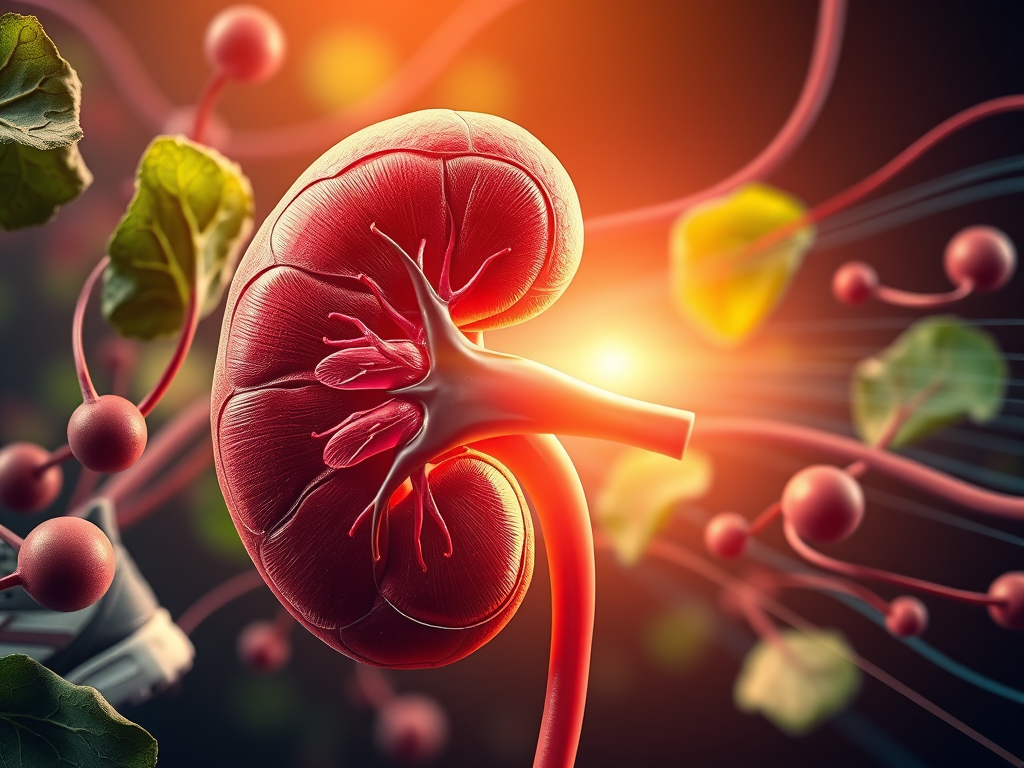
The Kidney’s Secret to Longevity: How Betaine Mimics Exercise and Redefines Anti-Aging Science
Recent breakthroughs in longevity research are reshaping our understanding of how the body ages and what we can do to slow down that process. A landmark study published in Cell by researchers from the Chinese Academy of Sciences and Xuanwu Hospital Capital Medical University reveals a fascinating mechanism: a simple metabolite called betaine, produced by the kidneys in response to exercise, may unlock anti-aging benefits that go far beyond the gym.1 This discovery doesn’t just explain why exercise works so well for longevity—it opens the door to new therapeutic possibilities for aging populations and people unable to maintain regular physical activity.
The Exercise Paradox: Why One Workout Hurts, But Regular Training Heals
For decades, exercise scientists have grappled with a perplexing phenomenon known as the “exercise paradox.” A single intense workout floods the body with stress hormones and inflammation markers, yet consistent, long-term training produces the opposite effect: improved health, stronger immunity, and delayed aging.1 This apparent contradiction has puzzled researchers, but the new study finally provides a mechanistic explanation that ties everything together.
The research team conducted an unusually thorough investigation, following 13 healthy men over six years while tracking how their bodies responded to both acute and chronic exercise.1 Using advanced multiomics tools—technologies that simultaneously measure genes, proteins, metabolites, and gut bacteria—the scientists compared the body at rest, immediately after a single 5-kilometer run, and following a 25-day structured running program. This multi-level approach revealed that the kidney, often overlooked in exercise physiology, acts as the body’s master coordinator of adaptation and anti-aging responses.
Betaine: The Kidney’s Anti-Aging Signal
At the heart of this discovery lies betaine, a naturally occurring metabolite that the body produces in the kidney during sustained physical training.1 Remarkably, betaine is already available in our diet—foods like beets, spinach, and other leafy greens contain significant amounts—but the body’s own production of betaine during exercise appears to be the crucial factor for triggering systemic anti-aging benefits.
When researchers tracked betaine levels across the study phases, they found something striking: short-term, intense exercise produced only modest increases in betaine, while sustained training over weeks triggered substantial increases in kidney betaine production.1 This distinction proved critical. The sustained elevation of betaine activated a cascade of protective mechanisms throughout the body that directly countered the aging process.
The mechanism behind betaine production involves an enzyme called CHDH, which the kidney upregulates during extended training.1 This finding is particularly elegant: the body essentially evolved a molecular switch that turns on during consistent, beneficial exercise and triggers a coordinated anti-aging response. It’s as if the kidney recognizes the difference between a stressful one-off exertion and the health-promoting signal of regular training, and responds accordingly with a molecule that packages anti-aging benefits throughout the body.
From Inflammation to Cellular Rejuvenation: Betaine’s Multi-System Effects
The study revealed that betaine’s anti-aging prowess stems from its ability to reduce chronic inflammation—a process researchers call “inflammaging,” which drives many age-related diseases. Betaine accomplishes this by binding to and blocking TBK1, a kinase that normally promotes inflammatory signaling pathways.1 By suppressing TBK1 and its downstream effects on immune and metabolic signaling, betaine essentially puts the brakes on the chronic, low-level inflammation that characterizes aging bodies.
But betaine’s effects extend far beyond inflammation control. During long-term training, the compound triggered a cascade of anti-aging processes including improved gut bacteria composition, enhanced antioxidant defenses, and reversal of age-related changes in T cells—critical immune cells that typically deteriorate with age. At the cellular level, betaine stabilized DNA and adjusted epigenetic marks, including reduction of ETS1 expression, effectively “resetting” immune aging.1 These epigenetic changes are particularly significant because they represent reversible modifications to how genes are expressed, suggesting that aging at this level may be partially reversible through the right intervention.
The most remarkable finding, however, came from a direct test: when researchers administered betaine alone to older mice without any exercise component, the metabolite produced many of the same benefits as training. Mice receiving betaine showed better metabolic function, improved cognitive performance, reduced depressive-like behavior, and lower inflammation markers throughout their bodies.1 In essence, the molecule alone could replicate what training does—a remarkable demonstration that the “exercise benefit” can be partially uncoupled from physical activity itself.
Bridging the Gap: A New Definition of “Exercise as Medicine”
This research has profound implications for public health. Not everyone can exercise regularly due to physical limitations, age, injury, or other constraints. Yet the mechanisms that make exercise beneficial—coordinated reduction in aging, enhanced immune function, improved metabolism—now appear accessible through a dietary or pharmacological intervention. As co-corresponding author Dr. Liu Guang-Hui noted, this study “redefines ‘exercise as medicine’” and opens the door to “geroprotective treatments that can tweak how multiple organs work together.”1
The significance of this multi-organ coordination cannot be overstated. Aging is not a single-organ process; it’s a systemic deterioration involving the immune system, metabolism, brain function, and countless other systems. Previous anti-aging interventions often targeted single pathways or organs in isolation, limiting their effectiveness. Betaine’s mechanism—working through the kidney as a hub to coordinate anti-aging responses across multiple organ systems—represents a more sophisticated understanding of how to intervene in aging.
Practical Implications and Future Directions
For individuals interested in longevity, this research suggests several takeaways. First, the clear value of sustained, regular exercise cannot be overstated—the kidney-betaine response requires consistent training, not sporadic workouts.1 Second, dietary sources of betaine (beets, spinach, seafood) may offer incremental benefits and warrant inclusion in a longevity-focused diet. Third, and perhaps most importantly, this work validates the scientific pursuit of pharmacological and nutraceutical interventions for aging—not as replacements for exercise, but as tools to extend anti-aging benefits to populations who cannot access exercise.
The fact that betaine is already considered safe by regulatory standards significantly accelerates its potential development as a therapeutic agent. Clinical trials in humans investigating betaine supplementation for age-related conditions are likely forthcoming. These trials could determine whether the promising results in mice translate to humans and at what doses betaine might provide meaningful anti-aging effects.
Conclusion: The Kidney’s Gift to Longevity Science
This research represents a watershed moment in longevity science. By identifying betaine as the molecular link between exercise and anti-aging benefits, researchers have not only solved a decades-old paradox but also created a new pathway for treating aging itself. The kidney emerges not as a mere filtration organ but as a sophisticated regulator of aging processes—a coordinator that responds to the signal of sustained physical activity by flooding the body with protective molecules.
As our population ages and the burden of age-related diseases grows, interventions that can safely and effectively slow aging mechanisms will become increasingly valuable. Whether through continued exercise, dietary betaine, or future pharmacological derivatives, the kidney-betaine pathway represents one of the most promising directions in contemporary longevity research. The journey from understanding this mechanism to developing widely available treatments may be years away, but the road is now clearly marked.
- Higher Education Press. “Scientists find a molecule that mimics exercise and slows aging.” ScienceDaily. ScienceDaily, 13 November 2025. <www.sciencedaily.com/releases/2025/11/251113071620.htm>.
Leave a Reply