
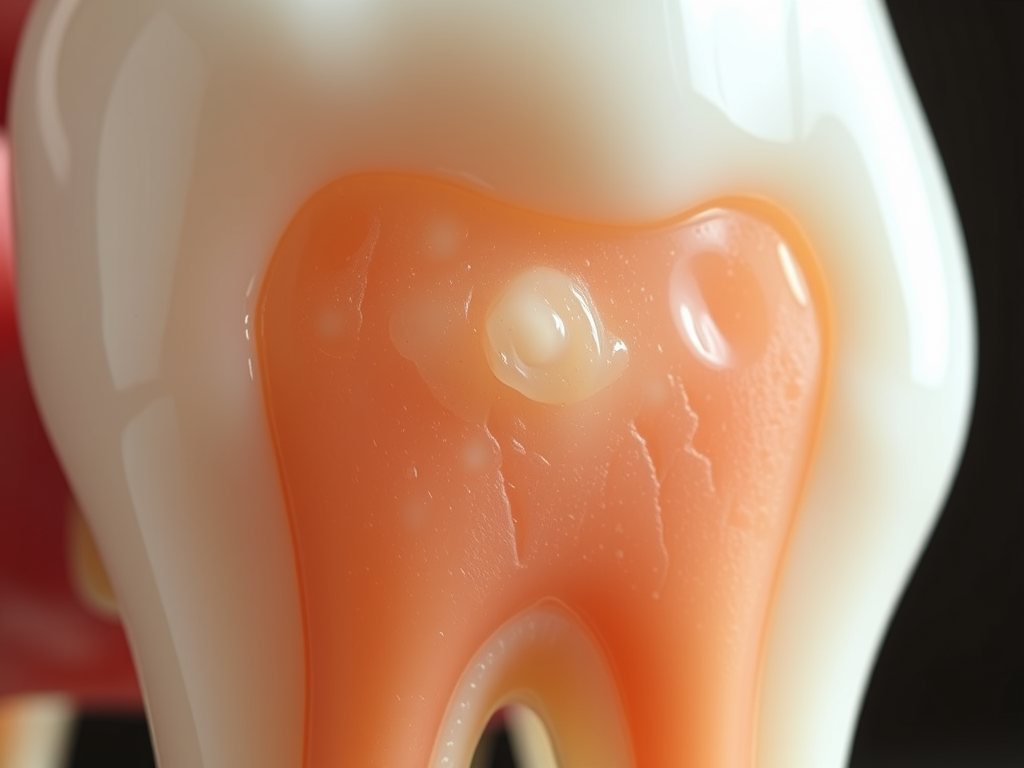
A Breakthrough in Dental Science
The prospect of restoring lost tooth enamel has long remained one of dentistry’s greatest challenges. Unlike bone or skin, tooth enamel does not regenerate naturally once it deteriorates through wear, acid erosion, or trauma. However, groundbreaking new research is changing that equation. Scientists have developed a biomimetic technology that can literally regrow dental enamel by recreating the natural processes that built your teeth in the first place.
The research, published in Nature Communications, represents a significant leap forward in addressing a global health crisis. Dental problems, including cavities and tooth loss from enamel erosion, affect nearly half of the world’s population and cost approximately $544 billion annually in treatment and lost productivity. Traditional solutions like fillings, crowns, and veneers can mask the problem, but they cannot restore enamel’s natural structure and properties. This new approach offers something fundamentally different: genuine enamel regeneration.
Understanding Enamel’s Architecture
To appreciate why this breakthrough matters, it helps to understand what makes enamel so remarkable. Dental enamel is the hardest tissue in the human body, composed of precisely aligned hydroxyapatite nanocrystals embedded in a protein matrix. These nanocrystals are arranged in a complex hierarchical organization that creates enamel’s exceptional properties: extreme hardness, high stiffness, remarkable toughness, and resistance to wear and chemical erosion. This exquisite architecture allows your teeth to withstand thousands of chewing cycles per hour and bite forces exceeding 700 newtons throughout your lifetime.
The challenge in regenerating enamel lies in recreating this intricate three-dimensional structure. Previous attempts using synthetic materials, acidic treatments, and laser technology failed because they could not duplicate enamel’s sophisticated organization or restore its full range of mechanical properties. The new research takes inspiration directly from nature, mimicking the biological processes that build enamel during tooth development.
The Elastin-Like Recombinamer Solution
The breakthrough centers on a specially engineered protein matrix called an elastin-like recombinamer (ELR). During normal enamel development, proteins called amelogenins assemble into ordered fibrillar structures that act as a scaffold, guiding the nucleation and growth of apatite nanocrystals in precise orientations. The research team designed ELR molecules to replicate this natural amelogenin matrix, creating what they call a “biomimetic supramolecular matrix.”
The ELR matrix is elegantly simple in application. Scientists apply it as a thin coating directly onto damaged tooth surfaces—whether that’s partially eroded enamel or completely bare dentin where all enamel has been lost. The coating forms a temporary scaffold that guides mineral deposition. When exposed to a mineralization solution rich in calcium and phosphate ions (similar to those naturally present in saliva), the matrix triggers the controlled, oriented growth of apatite nanocrystals that reconstruct enamel’s native microarchitecture.
Recreating Enamel’s Complex Structure
One of the most impressive aspects of this technology is its versatility. Natural enamel contains distinct architectural regions: the outermost aprismatic layer composed of crystals aligned perpendicular to the tooth surface, deeper prismatic regions organized in specific patterns, and inter-prismatic areas that bind these structures together. Previous regeneration attempts could replicate only one of these regions. The new ELR matrix successfully recreates all of them.
When the ELR coating is applied to areas with partial enamel loss, it regenerates the appropriate prismatic architecture. When applied to completely eroded surfaces exposing the underlying dentin, it generates an aprismatic enamel-like layer that integrates seamlessly with the dental substrate. Importantly, the thickness of the regenerated enamel can be controlled by adjusting the thickness of the initial ELR coating, allowing clinicians to precisely restore teeth to their original dimensions.
High-resolution microscopy reveals the sophistication of this regeneration. Electron microscopy images show newly grown nanocrystals aligning perfectly with and extending from the existing tooth structure, creating an indistinguishable boundary between native and regenerated enamel. This epitaxial integration—where new crystals grow in perfect crystallographic alignment with existing ones—mimics the natural integration that occurs during enamel development.
Restoring Lost Properties
Perhaps the most important evidence of successful regeneration comes from testing the mechanical and chemical properties of the regrown enamel. Acid-etched enamel typically loses much of its hardness and stiffness, becoming vulnerable to further erosion. After remineralization with the ELR matrix, these properties are substantially restored.
In rigorous testing, the remineralized enamel recovered its stiffness (Young’s modulus) from 37 gigapascals in damaged enamel to 76 gigapascals in the regenerated layer—comparable to healthy native enamel. Hardness values similarly recovered, increasing from 1.1 to 3.1 gigapascals. Wear resistance, friction properties, and resistance to chemical erosion all improved substantially.
Remarkably, in some measures, the regenerated enamel exceeded native enamel’s properties. Wear strength—a measure of resistance to fatigue failure—increased to 171 gigapascals in remineralized enamel compared to 154 gigapascals in native enamel. This enhanced durability may result from the densely packed crystalline structure of the regenerated layer.
Clinical Practicality and Durability
The researchers tested the technology’s durability under conditions simulating daily oral challenges. Remineralized enamel successfully withstood simulated toothbrushing equivalent to one year of brushing without losing its microstructure or mechanical properties. When exposed to acidic solutions mimicking dietary erosion, regenerated enamel actually showed greater resistance than native enamel. The layer remained stable when tested in natural human saliva from multiple donors, even under mechanical stress from simulated chewing and grinding.
Application is also clinically practical. The ELR coating can be applied in just three to four minutes, and the entire mineralization process can occur within the mouth using natural saliva as the mineralizing medium. This contrasts sharply with previous approaches requiring toxic chemicals, multiple application steps, or lengthy treatment periods.
Looking Forward
What makes this advancement particularly significant is its potential accessibility. The technology uses naturally derived materials and physiological mineralization conditions, suggesting it could eventually translate into practical clinical treatments without requiring complex equipment or extensive chair time. The researchers describe it as a “one-pot solution” applicable regardless of the severity of enamel loss—whether dealing with early erosion, extensive wear, or complete enamel loss on exposed dental surfaces.
For the billions of people worldwide suffering from cavities, erosion, and associated tooth loss, this research opens remarkable possibilities. Instead of accepting irreversible enamel damage and resorting to artificial replacements, patients might soon be able to genuinely restore their natural tooth structure. The breakthrough demonstrates how biomimetic approaches—learning from and replicating nature’s solutions—can solve problems that have stumped conventional materials science for decades.
The journey from laboratory demonstration to clinical application typically takes years, but the strength of these results suggests that regrown enamel might transition from research curiosity to routine dental treatment sooner than many expected. For dental science and patients worldwide, that prospect represents genuine cause for optimism. My teeth, after 56 years of wear and tear are in pretty bad shape already. If I plan to roughly double my age, I am going to need a solution like this. I look forward to a hopefully speedy time to market for this promising new technology!
Biomimetic supramolecular protein matrix restores structure and properties of human dental enamel, Nature Communications, 2025
Leave a Reply